

Import and export of spent nuclear fuel should be included in legislation
We are grateful for the opportunity to comment on the comprehensive reform of the Nuclear Energy Act.
The new law contains many desired and important reforms that are likely to facilitate the progress of nuclear power projects and investments while keeping the safety level of the industry high. However, the continued ban on the import and export of spent nuclear fuel is disappointing. It hinders Finland from utilising its full expertise and leading position in responsible final disposal to promote the construction of clean energy around the world, while gaining a significant new export sector.
This response focuses on the benefits that would be gained from making the import and export of spent nuclear fuel and other radioactive waste a licensed and carefully regulated activity, both to Finland and the wider international community.
Finland’s current legislation prevents the import and export of spent nuclear fuel for disposal. This law was enacted three decades ago when Finland joined the European Union. One of the motivations was the intimidation rhetoric used by EU-opponents that other member states would bring their radioactive waste here without asking Finland (which, of course, would not have been possible). Another motivation was that the spent fuel from the Loviisa nuclear power plant was taken back to Russia, and there was no transparent information about its management and ultimate fate.
However, a lot has changed in three decades. A vast amount of information and expertise has been gathered on spent nuclear fuel, including its management and disposal in a safe and sustainable manner. Nuclear power is currently seen as a significant part of the clean energy transition, and it has numerous strengths as part of a sustainable energy system. General and political acceptance has turned positive in many countries. With new nuclear power plants, new types of reactors, and new business models, it is also necessary to reconsider the benefits that enabling an international nuclear waste disposal facility in Finland would bring, both for Finland and the entire international community, for the planet’s ecosystems, and the stability of its climate system.
In the new draft legislation currently under public consultation (until 25th August 2025), the import and export of spent nuclear fuel for final disposal would still be categorically prohibited. Below are thematically justified reasons why the legislation should be amended in this regard and why operations should be allowed as a licensed activity, under strict regulatory supervision and in political and local cooperation with a possible disposal host community. At the end of a more general discussion of each topic, DeepGEO’s point of view is included, as a global actor in the field.
Leadership, Competence, and Responsibility
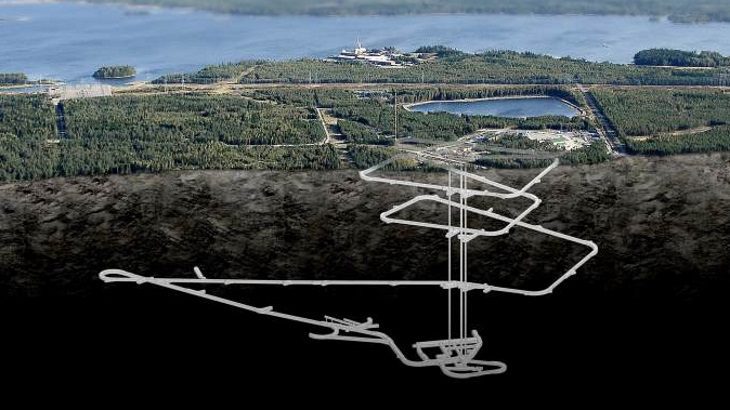
Finland is a global leader in responsible final disposal, with the next countries lagging by over a decade. However, this lead is not permanent, and it will start to shrink when final disposal operations begin. As Posiva likely enters the operation phase of ONKALO in 2026, the internationally valuable expertise in designing and researching the final disposal facility in Finland will also begin to atrophy.
Right now, however, everything is ready in Finland. In a decade or two, when, for example, Sweden gets its own facility ready, it will have fresh and best expertise at its disposal, while Finland’s expertise will have largely disappeared by then. For this reason, the next project must be started soon, and it requires international final disposal customers.
As a member of the EU and NATO, Finland is a member of the international community in a much more meaningful way than it was three decades ago. We can take responsibility as members of the community and at the same time offer valuable solutions to the problems of other community members. The investments, research, and development would create a unique centre of excellence in the treatment, decontamination, and final disposal of radioactive waste in Finland.
DeepGEO’s Goals
DeepGEO’s goal is to start the licensing of the final disposal facility and the related studies and processes as soon as possible, when we have sufficient visibility into the necessary legislative amendment. This would continue Posiva’s commendable work and the development of expertise in Finland. DeepGEO’s goal is to license and build regional disposal facilities in other countries/continents as well. The first project in Finland would create a center of excellence for the company, serving both domestic and international needs. On the other hand, if Finnish legislation does not allow the initiation of the licensing process of an international final disposal facility, DeepGEO, as an international company, will re-evaluate its focus more on other potential partner countries.
Environment, Climate, Sustainability
Nuclear power is an effective way to reduce greenhouse gas emissions and particulate pollution. It is the lowest-emission form of energy in terms of lifecycle emissions, in addition to which it provides the electricity system with valuable services that, for example, increase the stability, reliability, and resilience of the system. This, in turn, also helps to add wind and solar power to the system. The environmental and material footprint of nuclear power is by far the smallest of our energy sources, as the plants take only a small amount of area in relation to their capacity and use very little material and fuel per unit of produced energy. An increasing number of countries are planning to continue using existing power plants, build more nuclear power plants, or aim to introduce nuclear power to their energy mix. One significant obstacle to this is the various types of difficulties related to the responsible final disposal of radioactive waste.
Providing a multinational solution for the final disposal of nuclear waste will elegantly solve the ‘waste problem’. The solution will enable nuclear power projects to be included in the EU taxonomy, which in turn may significantly reduce the interest rate on the financing of the projects. This will enable more investments, leading to learning and the benefits of more serialized production, ultimately resulting in better project success. A positive feedback loop is created. Finland’s positive climate ‘handprint’ would be enormous, as a commercial final disposal solution would speed up the progress of nuclear power projects and enable lower financing costs for them.
The multinational waste solution also enables the provision of nuclear power as a service (energy as a service or a build-own-operate model). This will significantly expand the nuclear power market. For example, the Finnish reactor developer Steady Energy is reportedly interested in offering “heat as a service” to its future customers. It would arguably benefit from being able to offer waste management as part of its service, together with a responsible partner with a safe Finnish final disposal facility.
In this way, even countries that have not yet been able to undergo a full-fledged nuclear power and final disposal programme will be able to enjoy clean and reliable energy responsibly, either with the help of on-site or mobile nuclear power plants. The “Energy as a Service” concept enables, for example, the stabilisation of the energy system in developing countries and the growth of their economy and productivity. A well-functioning energy system is a basic prerequisite for a well-functioning and prosperous society.
DeepGEO’s Goals
DeepGEO bases its operations on sustainable development and fairness. It deposits most of its profits in an intergenerational investment trust fund, which helps to guarantee long-term responsible operations. This fund invests in new clean energy production, with an emphasis on nuclear energy. The investments will focus on DeepGEO’s final disposal host communities and customer countries, which in turn will guarantee local communities intergenerational benefits from the final disposal facility. DeepGEO’s business model thus helps in climate and environmental work by solving the nuclear waste problem that hinders nuclear power construction, in addition to which it finances new nuclear power with the proceeds of its operations, especially in the final disposal partner countries, promoting their economic vitality and well-being.
Politics and decision-making
At the moment, Finnish legislation prevents political discussion and decision-making (decision-in-principle) related to international disposal facilities. Even if the new legislation were to enable discussing the topic during a decision-in-principle process, Finland would still have the power to decide which applicant receives a positive decision, and from which country material can be imported to Finland (a bilateral government contract is required for the transfer of material to another country). The construction and operating licenses ensure that the facility operates responsibly, safely, and within regulations.
In practice, the legislation prohibiting the import and export of spent nuclear fuel also prohibits many innovative nuclear reactors in Finland. If they involve, for example, the replacement of the reactor core module with its fuel inside it, and its return to the manufacturer. Also, using a breeder reactor with the intent of taking some of the bred new fuel to load into reactors elsewhere would be prohibited (as the innovative thorium reactor of Copenhagen Atomics aims to do).
Preventing the introduction of innovative nuclear technology was not the original Act’s intention, and it is also inappropriate to prevent related political and business discussions and processes through legislation in the new Act. The justifications for the ban from 30 years ago are largely not valid in the current situation. On the contrary, more justifications have emerged and strengthened in favour of removing the ban.
DeepGEO and politics
If successful, DeepGEO will be a multinational company that continuously facilitates discussions and fosters connections between governments and key actors across numerous countries. The only sustainable approach to this is responsibility, openness, and constructive cooperation between different actors.
Economy and Investments – Finland and Host Locations
A large final disposal facility and the related research activities, planning, construction of a temporary storage facility and other infrastructure, and the operation of the facility, is a direct investment of well over EUR 10 billion during multiple decades. The host location receives significant property tax revenue from the disposal facility during its operation (according to our estimates, possibly more than EUR 10 million per year for a large facility). In addition, the project employs hundreds, even thousands, of highly paid professionals directly and indirectly for decades.
The global market value of high-level waste disposal is approximately USD 470 billion (2025) and will grow by approximately USD 10 billion per year. This assumes the value of the final disposal to be about one million dollars per tonne, which is a generally accepted value internationally, but many countries are prepared for a higher cost. That entire number would fit into about ten sites, each a couple of square kilometers in size, with only a few buildings would remain on the surface of the ground, and in the long run, not even those. If the world’s nuclear power output increases by 2–3 times, as is the current goal, more high-level waste will also be generated.
DeepGEO’s Business Model
DeepGEO‘s business model includes that the profits from its operations are deposited in an investment trust fund that carries over generations. This fund serves as DeepGEO’s own collateral fund and, if necessary, a back-up resource for future turmoil. The investment trust fund makes purchases and invests with a focus on clean (nuclear) energy, with an emphasis on the locations and countries of the final disposal facilities, as well as customer countries. The intention is to act as an important financier and project developer in the nuclear power sector, especially in the early stages of nuclear power projects.
With the fund and depending on the size of the final disposal facility, Finland could have ~10 billion euros invested in nuclear power, in addition to the final disposal facility. The intention is to continue investing when the returns from these investments are reinvested into the fund. In this sense, DeepGEO’s fund works a bit like the sovereign wealth funds of oil-rich countries. In addition, DeepGEO’s operating model includes a royalty system, which the partner country and location can benefit from once the operations have started.
Development and Technology
A wide range of new nuclear reactors is being developed at a rapid pace around the world. Some of them are designed to be “breeders”, i.e., they can produce more fissile fuel from fertile material than they use. Isotopes that are still suitable for energy production can also be separated from the spent fuel and used to produce MOX fuel that is also suitable for current light-water reactors. Spent nuclear fuel can therefore be reprocessed and recycled for reuse. At the same time, the amount of spent nuclear fuel to be disposed of will decrease, and the relative need to produce new nuclear fuel will decrease.
The investments into the facilities and other infrastructure, as well as the R&D required for the reprocessing of spent fuel (which is today done in France and Japan, for example), are significant. They also require that there is a sufficient amount of “raw material”, i.e., spent nuclear fuel, available. It is therefore possible that the “nuclear waste” intended for final disposal will be redefined as raw material instead of waste, and recycled for further use, after which the radioactive waste generated from it will be disposed of. The movement and handling of nuclear materials are subject to strict international control and supervision, and always require their own political discussion and approval on a case-by-case basis.
DeepGEO’s Goals
DeepGEO’s primary goal is to provide responsible, international final disposal services for radioactive material, as it is currently the most immediate unsolved problem and bottleneck. At the same time, DeepGEO keeps a close eye on the technological and commercial development of spent nuclear fuel reprocessing and industry players. For example, DeepGEO could lease the spent fuel back to the country that handed it over if that country wants to use it to produce new nuclear energy. After that, DeepGEO would dispose of the resulting high-level waste responsibly.
Safety
Despite first impressions, final disposal of nuclear waste is a careful, safe, closely monitored activity that leaves only a small environmental impact. Even a large DGR facility has a smaller environmental impact than most mines.
Centralized disposal facilities enhance international radiation safety by allowing materials to be disposed of professionally in a well-suited location, rather than in less suitable geologies or in temporary storage facilities for unnecessarily long periods. In addition, the oversight of nuclear materials will be easier when there are fewer storage and disposal locations. When materials can be disposed of faster and more reliably, the risk of them falling into the wrong hands is also reduced.
DeepGEO’s Mission Statement
DeepGEO will comply with and further develop all relevant international and national safety regulations, agreements, guidelines, and best practices.
International Reputation and Cooperation
If the world’s first international final disposal facility for spent nuclear fuel is licensed and built in Finland, Finland will be able to enjoy a growing international reputation and influence as a responsible and professional operator and member of the international community. Treaty negotiations with client countries and companies, along with the long-term cooperation and dialogue they foster, would generate a substantial number of new contacts and opportunities for establishing and enhancing other cooperation and bilateral trade relations.
Expertise related to final disposal and the handling of radioactive materials would increase and create opportunities for various educational, training, and consulting services. The high-level political relations established through bilateral treaty negotiations may also foster other forms of cooperation and business relationships. Finland’s good reputation as a pragmatic and successful solver of problems and as a reliable partner would grow even further. In addition, Finland’s “carbon handprint”, i.e., the positive climate impact of the products and services produced by Finland, would grow significantly and show that Finland is a responsible international actor that is larger than its size in the climate and environmental sector. While others talk about solving problems, Finns solve them.
DeepGEO’s International Operations
DeepGEO’s goal is to build several regional disposal facilities around the world. Whichever country is first, it is likely to create a hub for DeepGEO’s expertise and contribute to future operating models in other partner countries as well. If successful, DeepGEO will work with key decision-makers in dozens of countries as a facilitator and commercial party in treaty negotiations. In addition, if successful, DeepGEO will finance and enable faster and more cost-effective construction of nuclear energy in several countries, especially in its partner countries, reducing the pressure to use fossil fuels while contributing to a reliable and affordable energy supply for people and society, enabling a vibrant economy and well-being.
***
The memorandum was written by Rauli Partanen / DeepGEO Finland Oy.
Contact us

David Hess
Media Inquiries